

I have a secret.
Something I almost never volunteered in professional settings.
I don’t have a college or university degree.
I’ve attended both. When I was younger, I wandered through classrooms and campuses trying to figure out who I was supposed to become. Like a lot of people that age, I thought the answer might be hidden somewhere in a classroom.
But I never found it there.
What I found instead was work.
Messy work. Humbling work. The kind of work where nobody cares about your potential and everyone cares about whether you can solve problems, communicate clearly, stay calm under pressure, and keep showing up when things get difficult.
I think part of that started long before my career ever did.
I come from a family of five kids, and there wasn’t a lot of extra money. The basics were covered, but if I wanted anything beyond that, I had to go earn it.
So I hustled.
I had a paper route. I worked odd jobs during the summers. By sixteen, I was working as close to full time as a high school schedule would allow. As soon as classes ended, I was on the clock somewhere.
Looking back now, I realize I never really stopped.
Part of that was survival. Part of it was how I was raised. Work wasn’t discussed philosophically in our house; it was simply what you did. You contributed. You figured things out. You kept moving.
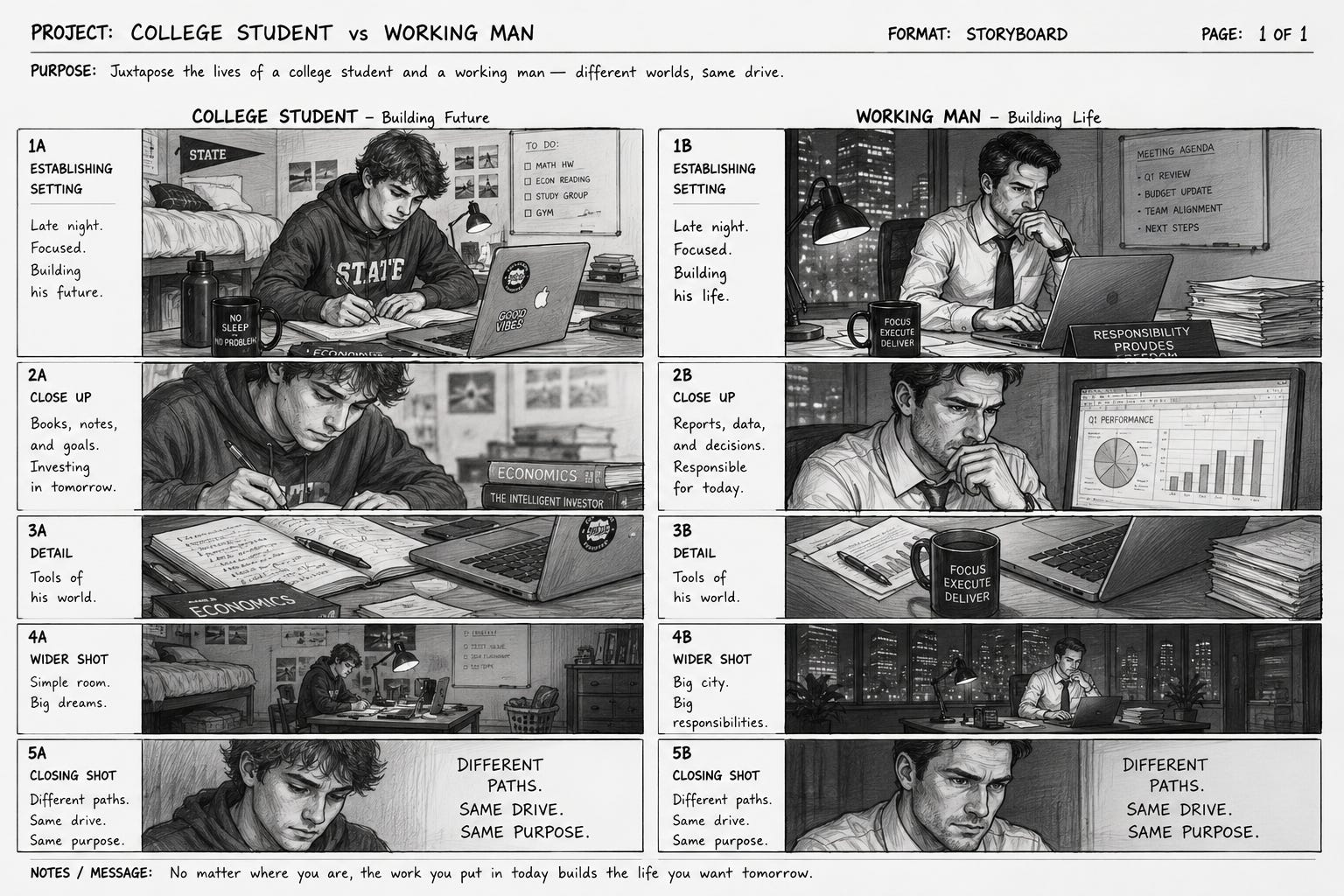
But if I’m being honest, another part of it came from something harder to admit.
I have spent much of my professional life carrying around a quiet sense that eventually someone would discover I didn’t belong in the room.
Not because I couldn’t do the work. I could. I did. Repeatedly.
But because in a world that often treats degrees as shorthand for intelligence, capability, and legitimacy, I knew I lacked the credential people instinctively respected.
Early in my career, I kept that fact hidden.
I managed people with degrees from respected colleges and universities. Smart people. Capable people. People who had spent tens of thousands of dollars earning credentials that society immediately recognized. Meanwhile, I had arrived at the same table through a completely different route: grit, stubbornness, long hours, self-teaching, failure, adaptability, and a willingness to outwork almost anyone around me.
So I compensated the only way I knew how: by working harder.
Earlier than everyone else. Later than everyone else. Taking on more. Learning on the fly. Trying to outrun the feeling that I was somehow behind before I even started.
What changed isn’t what you might think.
The doubt didn’t leave. It still knocks when I’m updating a profile or filling out a resume — the same finger pushing at the same door.
What’s interesting is that the conversations I’ve had with people in academia tend to circle around the same list of outcomes. Higher education, they say, teaches people to think critically, solve complex problems, communicate effectively, manage competing responsibilities, and operate independently.
Those are real skills. And they’re right to claim them.
But here’s the thought I keep coming back to:
Those skills are not exclusive to higher education.
Some people learn them in lecture halls.
Others learn them because rent is due Friday.
This isn’t an argument against college or university. Higher education absolutely has value. It exposes people to new ideas, different perspectives, mentorship, structure, and opportunities they may never encounter otherwise. Degrees can open doors, and for many professions they should.
But somewhere along the way, we also started confusing credentials with capability.
We started acting as though intelligence only counts when it arrives stamped with institutional approval.
Life doesn’t really work that neatly.
Some people are educated by professors. Others by responsibility. Or hardship. Or failure.
The older I get, the more I realize there are brilliant people everywhere who never had the opportunity, resources, timing, or desire to pursue formal education. There are also highly educated people still trying to figure themselves out. The diploma alone never tells the whole story.
And maybe that’s why I finally stopped treating this like a secret.
Because the truth is, I did belong in those rooms.
Not because someone handed me permission to be there, but because over years of work, mistakes, learning, persistence, and showing up when things got hard, I earned my seat at the table the same way most people eventually do:
One day at a time.